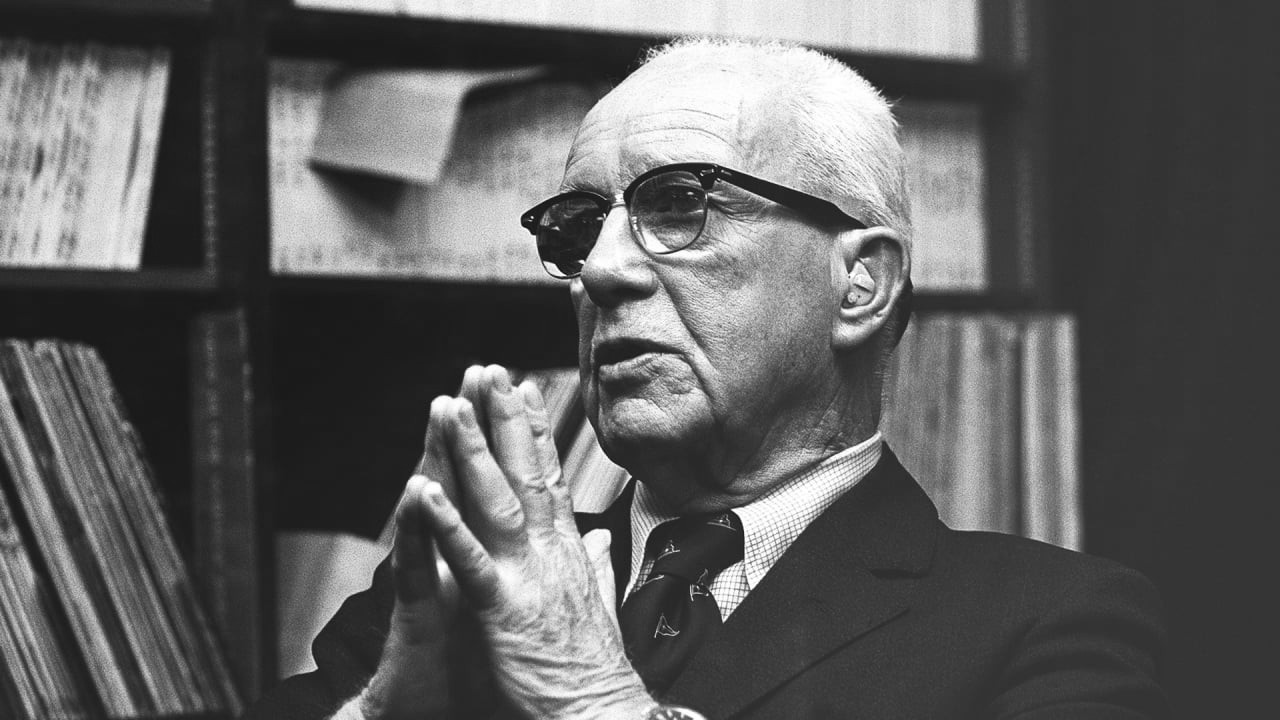
Living Fuller's Vision: How AI-Augmented Design Is Freeing Creatives to Return to Their Studies
June 28, 2025
There's a book that keeps coming back to me. Buckminster Fuller's "Education Automation: Freeing the Scholar to Return to His Studies" was written in 1962, but its core insights feel more relevant today than ever. As someone who's spent 18+ years in design—moving from teaching design to corporate training to UX work—I keep rediscovering Fuller's ideas in unexpected places.
Recently, I realized I'm actually living out his vision in my own design practice, thanks to AI.
The Fuller Framework
Fuller's central thesis was radical for its time: traditional education was obsolete and inefficient. He envisioned replacing conventional classrooms with automated, individualized learning systems that would free teachers from routine instruction to focus on creative guidance and mentorship.1
But his insight went deeper than just education reform. Fuller was describing a fundamental principle about how technology should augment human capability: by handling the mechanical, repetitive tasks, technology frees human intelligence to focus on what only humans can do—creative thinking, pattern recognition, and complex problem-solving.2
From Weeks to Hours: The Transformation
This principle hit home when I started experimenting with AI-augmented design tools. Using Claude for initial ideation, Cline and VSCode for rapid prototyping, I can now take a complex design concept from brain dump to working prototype in 3-4 hours. What used to take weeks or months—limited by my JavaScript knowledge—now happens at the speed of thought.
Take my recent SecureGuard Password Intelligence prototype. It combines my backgrounds in learning design, UX, and security to tackle a fundamental question: "Why do password requirements feel like punishment?" Instead of writing out design specs or creating static mockups, I was able to rapidly prototype an interactive experience that teaches through doing—making abstract security concepts tangible and immediate.
The time compression isn't just about efficiency. It's about maintaining cognitive momentum. Instead of losing the thread of an idea while wrestling with technical implementation, I can stay in that creative flow state where insights build on each other.
The Bigger Picture
This isn't just about individual productivity gains. It's about fundamentally different ways of working and thinking. When technical friction is removed from the creative process, designers can:
- Explore more ideas without implementation constraints
- Iterate based on actual user interactions rather than assumptions
- Tackle interdisciplinary problems that require comprehensive thinking
- Focus on the human-centered aspects that only humans can do well
As I continue experimenting and documenting this approach, I'm realizing that Fuller's 1962 vision wasn't just about education. It was about the future of human creativity and intelligence in an age of technological augmentation.
We're living in that future now. The question is: how will we use it?
This post grew out of a conversation about the recurring influence of Fuller's ideas across different domains of design and technology. You can see more of my AI-augmented design experiments at tchr01.github.io/ux.
References:
- Fuller, R. Buckminster. Education Automation: Freeing the Scholar to Return to His Studies. Southern Illinois University Press, 1962, p. 21.
- Fuller, p. 21.