Revolutionizing UX Wireframing: From Hours to Minutes with AI-Powered Prototyping
July 22, 2025
How I built three interactive wireframes in 90 minutes that would have taken days in traditional design tools
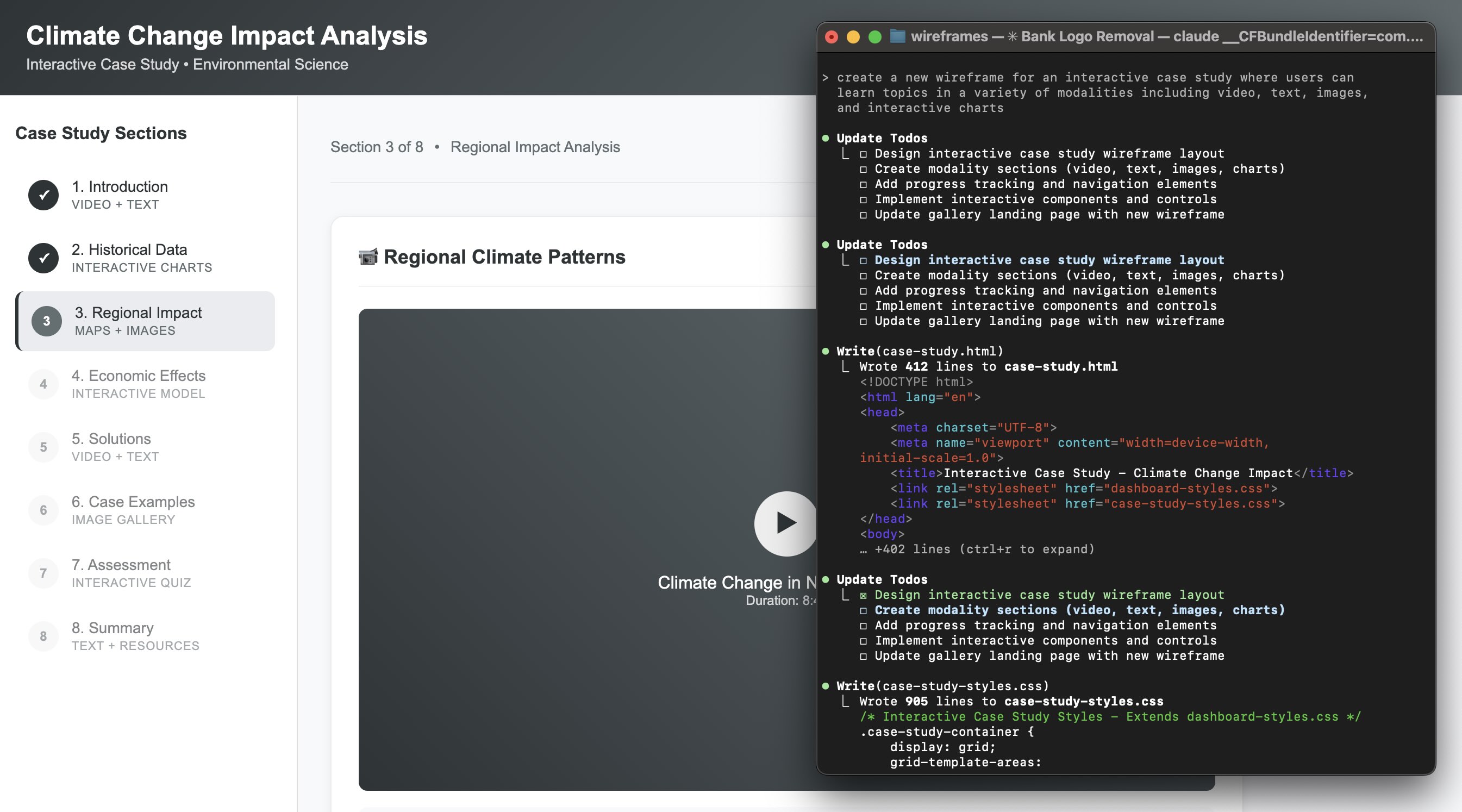
The Problem: Traditional Wireframing Is Slow
Every UX designer knows the pain: brilliant ideas trapped in slow tools. Figma requires drawing every component from scratch, precise alignment, and manual interaction states. What should be rapid ideation becomes methodical construction.
The Solution: AI-Powered Speed
Using Claude, I built 3 fully interactive wireframes and a stakeholder gallery in 90 minutes - a process that typically takes 6-8 hours in Figma.
The Challenge: Three different UI patterns - project dashboard, interactive case study, and financial portfolio planner.
The Result: 90 minutes total for polished, interactive prototypes with consistent branding.
The Speed Advantage: A Side-by-Side Comparison
Traditional vs AI-Powered
Figma (6-8 hours): Setup, component library, three wireframes, responsive design, interactions, branding
AI Workflow (90 minutes): Review PRD → ClaudeCode terminal → Input details → Test → Modify → Auto-add to gallery → Push to GitHub
12xfaster than traditional methods
averaging 30 minutes per wireframe
Quality at Speed
The wireframes weren't just fast - they included sophisticated features that would take hours manually:
- Interactive: Real-time calculations, dynamic charts, progress tracking
- Technical: Validation logic, responsive layouts, SVG animations, accessibility
- Systematic: Consistent styling, reusable components, modular architecture
Lightning-Fast Iteration
Real-time refinements happened in minutes: misaligned components rebuilt instantly, validation logic added on-the-fly, and global branding updates across all pages in 3 minutes.
What This Changes
From Construction to Conversation: Less time building, more time on strategy, research, and user flows.
Democratized Prototyping: Product managers, researchers, and stakeholders can create complex prototypes without developers.
Real-Time Design: Live client sessions with instant modifications, rapid A/B testing, quick pivots.
Humans Still Essential
AI accelerates execution, but designers remain critical for strategy, user needs, information hierarchy, creative direction, and quality assurance.
The Future Is Now
Speed enables better design: more concepts tested, faster iteration, lower barriers for startups and enterprises. When wireframing isn't the bottleneck, we focus on what matters: strategy, research, and user experience.
Speed of Thought
Creating three interactive prototypes in 90 minutes isn't just about speed - it's about matching human creativity with the tools to express it.
The future of UX design isn't about replacing human creativity - it's about amplifying it. And that future is available today.
Want to see these wireframes in action? Visit tchr01.github.io/prototypes/wireframes and experience the interactive features firsthand. Each wireframe demonstrates different UI patterns and interaction models that can inform your next design project.
About This Process: These wireframes were created using Claude Code, demonstrating the potential for AI-assisted design workflows. The complete process, including all iterations and refinements, took approximately 90 minutes from concept to final interactive prototypes.